Teaching With The Fluent Framework
You didn't become a language teacher to administer flashcard drills.
The Fluent Framework Is Your Way Forward
The Fluent Framework is a philosophy and toolkit for teaching language with meaning, culture, and sustainability — whether you're an independent tutor working one-on-one or an institutional educator navigating constraints. It's not about abandoning structure. It's about teaching meaningfully within (or beyond) the system.
You became a teacher because you believe language learning can be transformative. Because you know that fluency is more than grammar charts and vocabulary lists. Because you've seen what happens when a student finally feels confident — not just correct.
But somewhere along the way, teaching started to feel mechanical. You're stuck following curricula that prioritize coverage over connection. You're pressured to prep students for tests that measure memorization, not communication. You're exhausted from trying to make language learning human inside systems that treat it like factory work.
You know your students need more. And so do you.
What Is The Fluent Framework?
The Fluent Framework is a philosophy built on six pillars that redefine what fluency means — and how we teach it:
Meaning Over Mechanics
Teach language through context, story, and real-world use — not isolated drills. Grammar and vocabulary matter, but only when they serve communication.
Input That Matters
Not all input is equal. Curate content that's emotionally resonant, culturally rich, and aligned with your students' goals — not random exercises from a textbook.
Voice Over Vocabulary
Help students express themselves — their ideas, their personality, their perspective. Fluency should sound like them, not a textbook.
Sustainable Systems
Design lessons and routines that adapt to your students' lives and energy levels. Fluency is a relationship, not a sprint. Avoid burnout — for them and for you.
Culture As Context
Teach through art, music, food, and lived experience — so students connect with the world the language comes from, not just words on a page.
Emotional Fluency
Real fluency isn't just linguistic. It's the confidence to speak, the comfort to make mistakes, and the connection students feel when language becomes second nature.
Who This Is For
For Independent Teachers
If you teach one-on-one (via italki, private lessons, or small groups), you have the freedom to design your own curriculum and teaching approach. The Fluent Framework gives you:
A coherent philosophy to guide your lesson planning and student interactions
Practical tools and lesson arcs that embody voice-first, meaning-driven teaching
Permission to teach meaningfully — without the pressure of institutional curricula or standardized tests
You have the freedom. Here's the framework.
For Institutional Educators
If you teach in a school, university, or language center, you're navigating constraints: fixed curricula, standardized tests, and administrative expectations. The Fluent Framework gives you:
Small rebellions — ways to teach meaningfully within the system without abandoning structure
Lesson design strategies that honor curriculum requirements while prioritizing student voice and connection
Sustainable practices that prevent burnout — for you and your students
You're working within constraints. Here's how to teach meaningfully anyway.

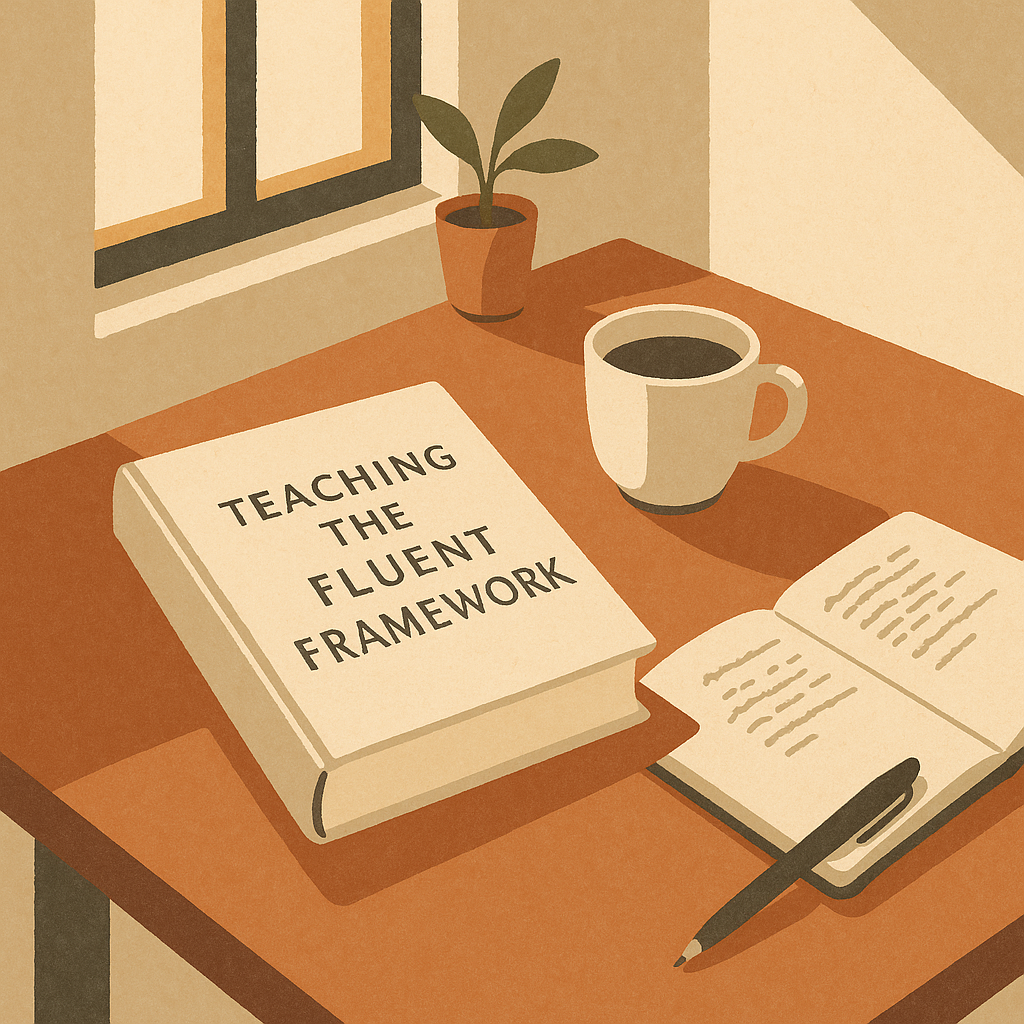
The Educator’s Book: Teaching The Fluent Framework
A comprehensive guide for language teachers who want to make learning human again. This book covers:
The philosophy behind each pillar of The Fluent Framework
Practical lesson arcs, activities, and frameworks you can use immediately
Strategies for teaching meaningfully within institutional constraints
How to design sustainable systems for yourself and your students